
Nader
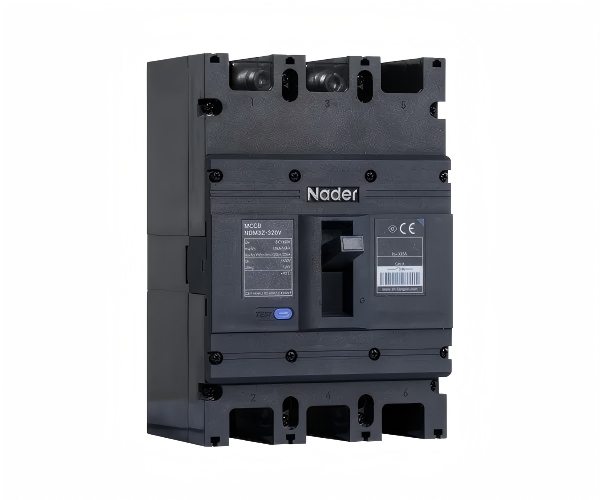
NDM3Z-320V Series DC MCCB, Nader
Model: NDM3Z-320V
Key specifications
- Rated current In (A) 250A, 300A, 320A
- Rated voltage Ue (V) DC1500V
- Poles 3P
- Rated ultimate short-circuit breaking capacity Icu (kA) 10kA, 20kA
Technical parameters
Rated current of frame Inm (A) | 320A | |
Rated Voltage (Ue) (V) | DC1500V | |
Rated Current (In) (A) | 250A, 300A, 320A | |
Rated Insulation Voltage Ui (V) | 1500V | |
Rated impulse withstand voltage Uimp (V) | 12000V | |
Tripping Characteristics | / | |
Number of Poles | 3P | |
Rated limit short-circuit breaking capacity level | / | |
Rated limit short-circuit breaking capacity Icu (kA) | 10kA | 20kA (τ=5ms) |
Rated operating short-circuit breaking capacity Ics (kA) | 10kA | 20kA (τ=5ms) |
Rated Frequency (Hz) | 50/60Hz | |
Standards and Certificates | ·CCC, TUV, CE ·GB/T 14048.1, GB/T 14048.2, IEC 60947-1, IEC 60947-2 | |
Maintenance-free life | 10000 times | |
Maintainable life | 20000 times | |
Electrical Life | 1000 times | |
Flashover distance(mm) | ≤50 | |
Wiring | ·Wiring mode: / ·Thread diameter: M8 (Torque value: 12N.m), M4 (Torque value: 2.4N.m) ·Connection capacity: 120mm² (250A), 185mm² (300A), 185mm² (320A) | |
Normal Working Environment | ·Ambient Temperature: -35℃~+70℃ ·Storage Temperature: -40℃~+75℃ ·Altitude: ≤2500m ·Environmental Requirements: RoHS ·Relative Humidity: The relative humidity at an ambient temperature of +40℃ should not exceed 50%. A higher relative humidity is allowed at a lower temperature. ·The product can withstand the effects of wet air, salt mist and oil mist. ·Pollution Level: 3 ·Protection class: IP20 | |
Isolation Function | ·Installation Category: The installation category of the circuit breaker connected to the main loop is:Ⅲ(power distribution and control level); The installation category of the circuit breaker not connected to the main loop is:Ⅱ(load level). ·Installation Environment: The product should be installed in places that are free from explosive media, media corrosive to metal, insulation damaging gas, and conductive dust, which should be also avoided from snow and rain. | |
Related products
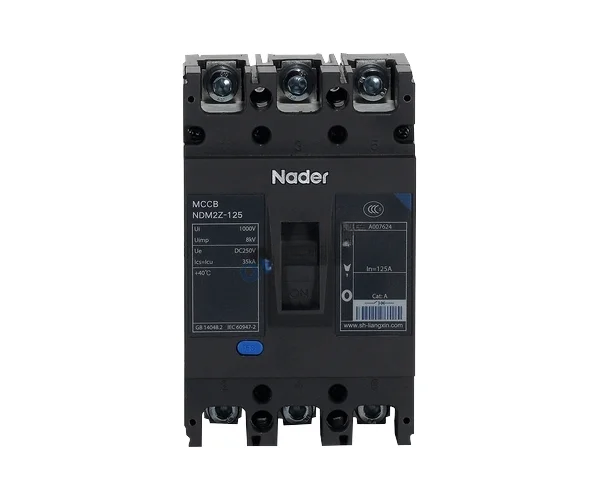
NDM2Z-125 Series DC MCCB, Nader
Rated current In (A): 16A, 20A, 25A, 32A, 40A, 50A, 63A, 80A, 100A, 125A. Rated voltage Ue (V): DC250V. Poles: 2P, 3P. Rated ultimate short-circuit breaking capacity Icu (kA): 35kA
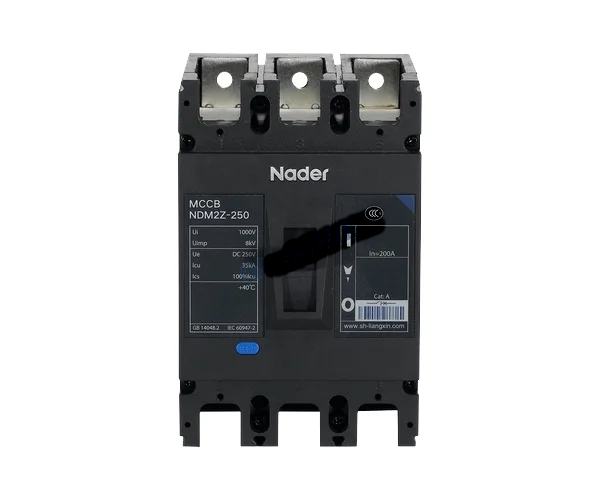
NDM2Z-250 Series DC MCCB, Nader
Rated current In (A): 125A, 140A, 160A, 180A, 200A, 225A, 250A. Rated voltage Ue (V): DC250V. Poles: 2P, 3P. Rated ultimate short-circuit breaking capacity Icu (kA): 35kA
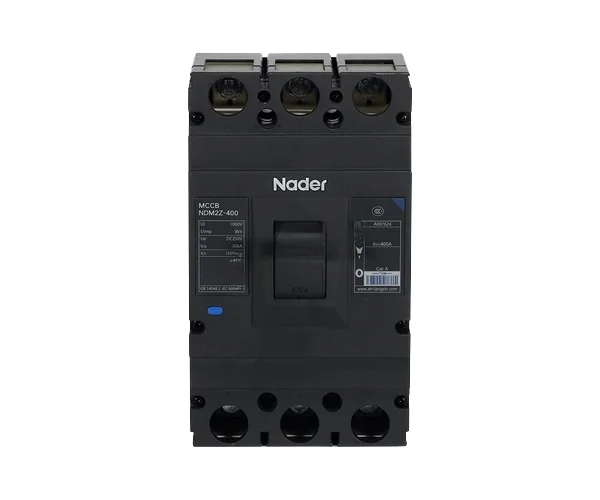
NDM2Z-400 Series DC MCCB, Nader
Rated current In (A): 225A, 250A, 315A, 350A, 400A. Rated voltage Ue (V): DC250V. Poles: 2P, 3P. Rated ultimate short-circuit breaking capacity Icu (kA): 50kA
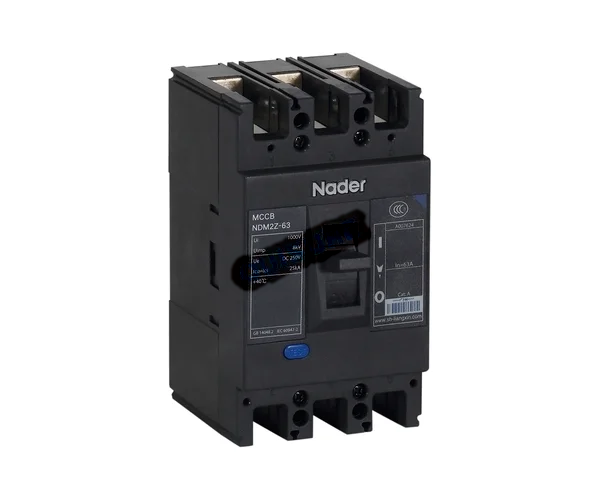
NDM2Z-63 Series DC MCCB, Nader
Rated current In (A): 10A, 12.5A, 16A, 20A, 25A, 32A, 40A, 50A, 63A. Rated voltage Ue (V): DC250V. Poles: 2P, 3P. Rated ultimate short-circuit breaking capacity Icu (kA): 25kA
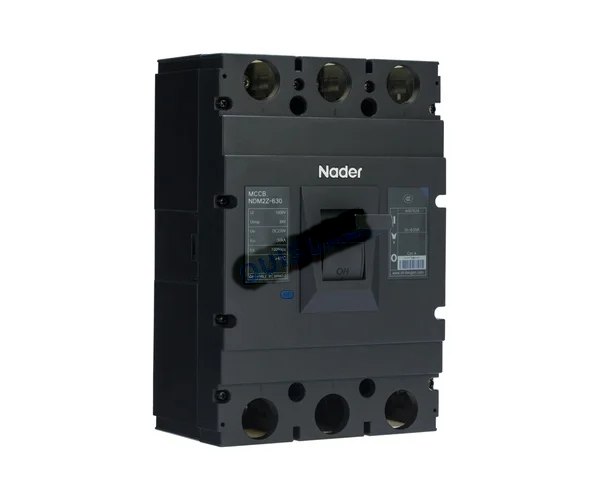
NDM2Z-630 Series DC MCCB, Nader
Rated current In (A): 400A, 500A, 630A. Rated voltage Ue (V): DC250V. Poles: 2P, 3P. Rated ultimate short-circuit breaking capacity Icu (kA): 50kA
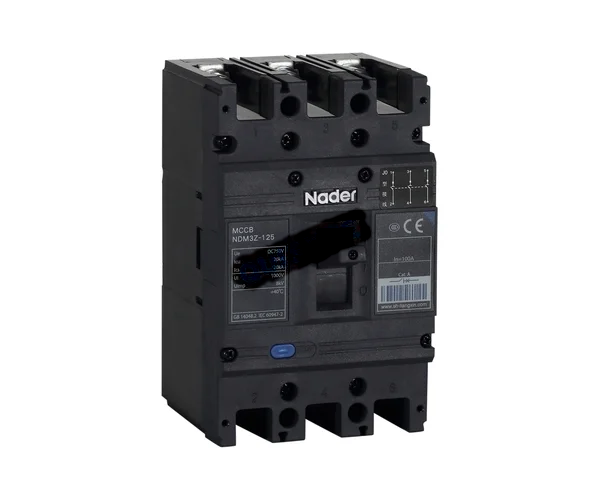
NDM3Z-125 Series DC MCCB, Nader
Rated current In (A): 16A, 20A, 25A, 32A, 40A, 50A, 63A, 80A, 100A, 125A. Rated voltage Ue (V): DC500/750/1000V. Poles: 2P, 3P, 4P. Rated ultimate short-circuit breaking capacity Icu (kA): 20kA